

Open the Imports page
1
Open Imports
Click your avatar in the bottom-left corner and select Bulk Imports.
2
Review previous imports
The Imports page lists your previous upload tasks with their type, file name, status, and timestamps.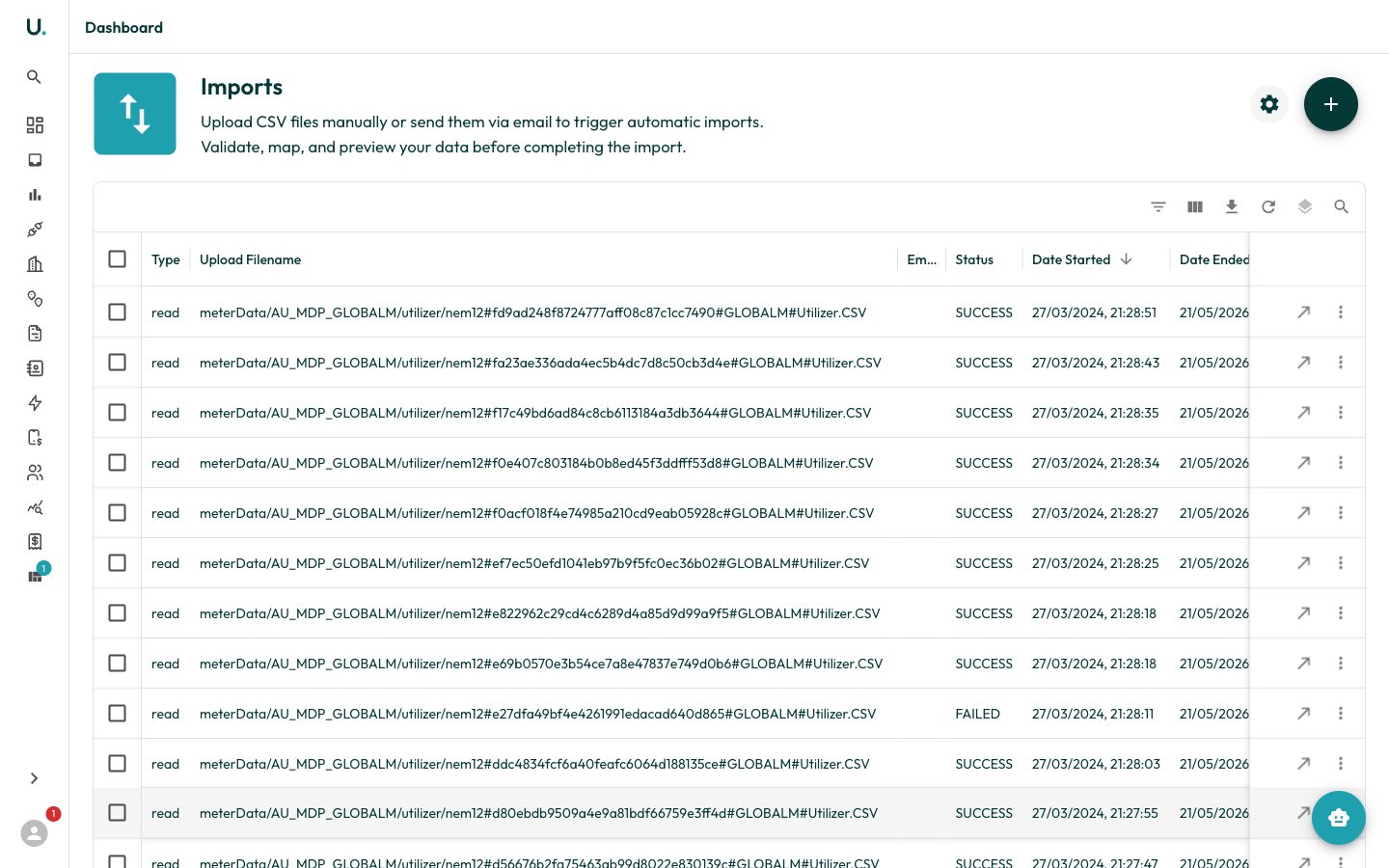
3
Start a new import
Click the + button in the top-right to open the Bulk Upload Wizard.
Run the Bulk Upload Wizard
The wizard guides you through four steps: select a template, choose how to provide your data, supply the data, then upload and monitor.1
Select a template
Choose the type of data you want to import. Each template card shows how many fields it has and how many are required.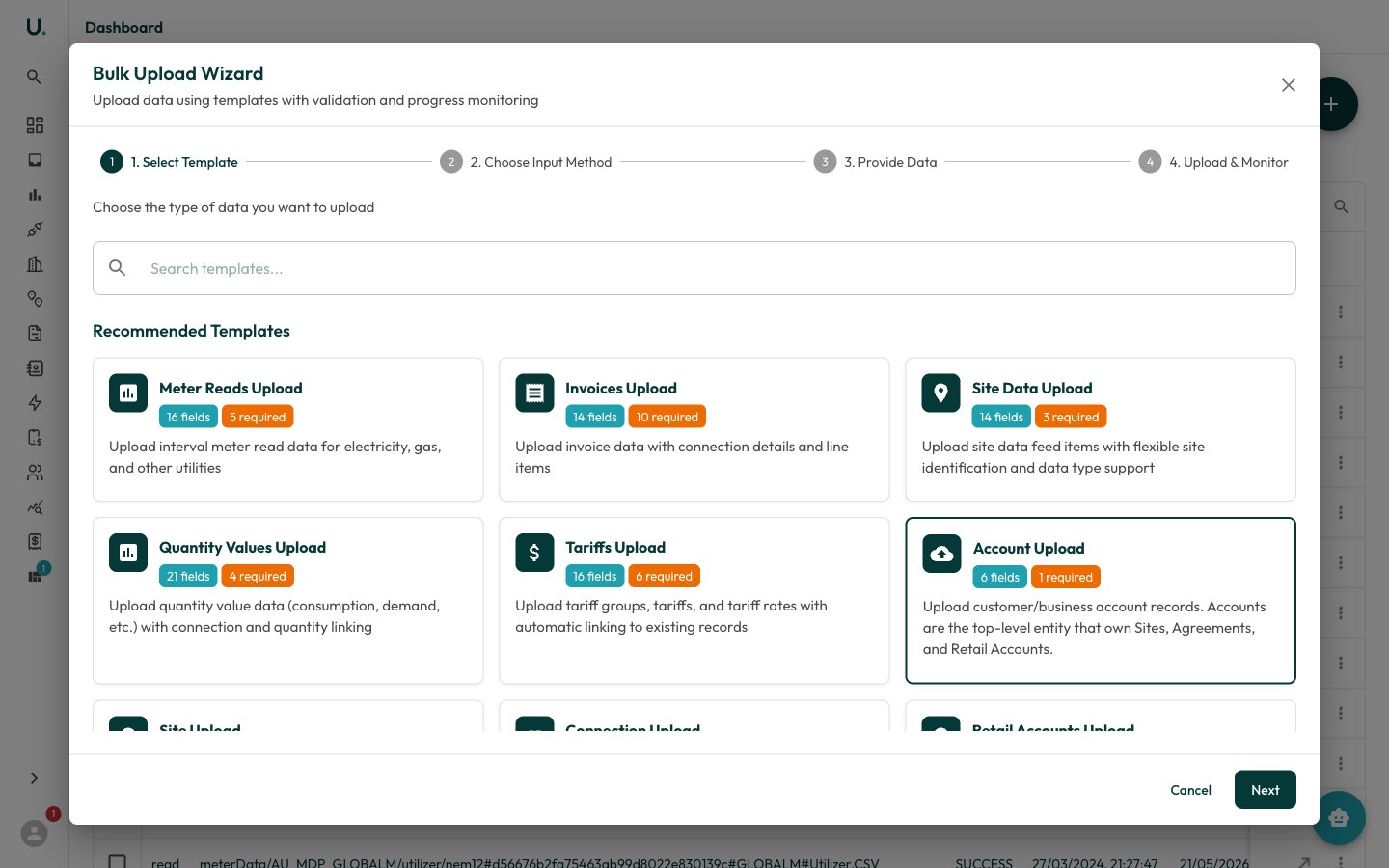
2
Choose an input method
Decide how you want to provide your data — upload a CSV file, or enter rows manually in an editable grid.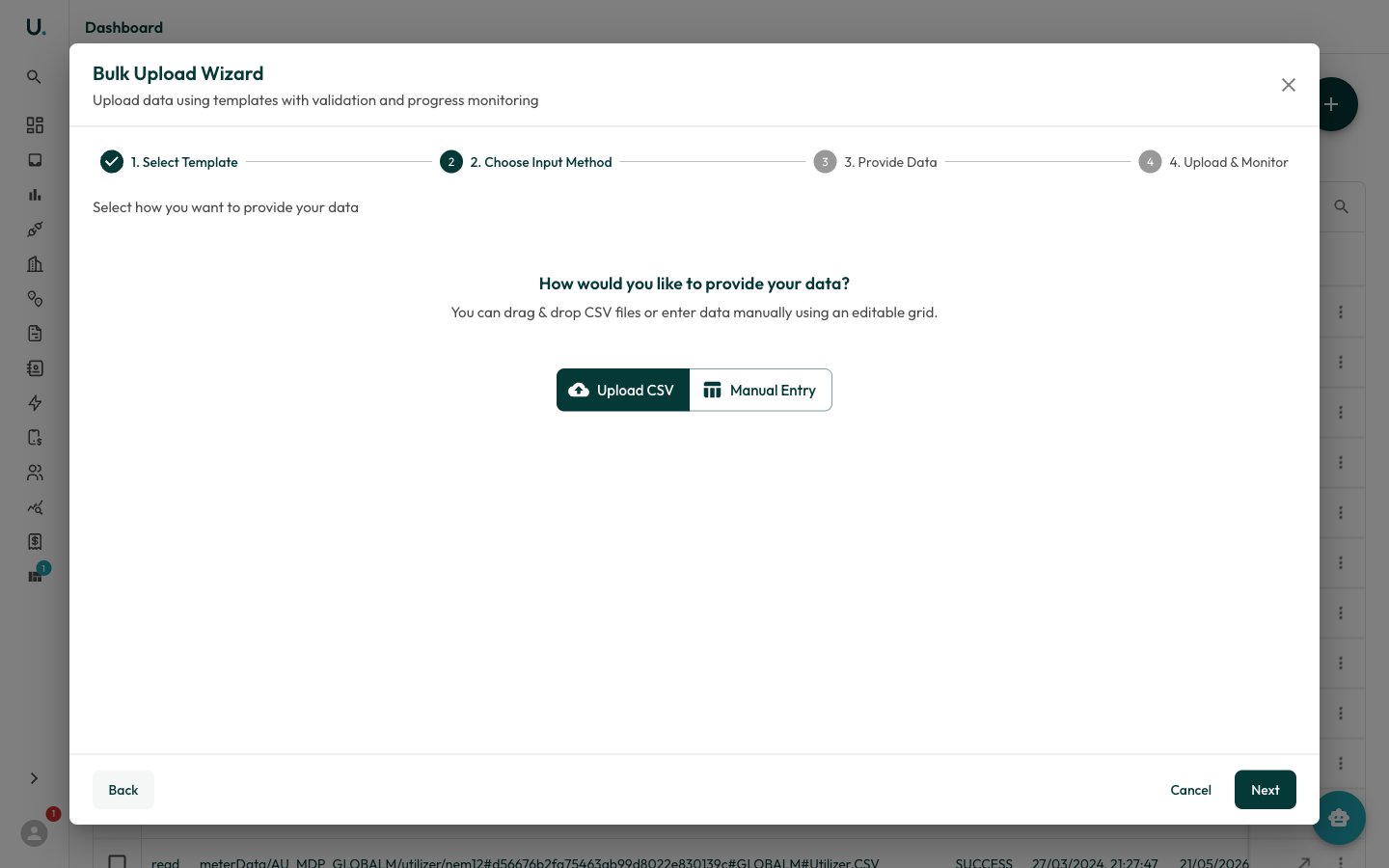
3
Provide your data
If you chose Upload CSV, click Download Template with Sample Data to get a correctly-formatted CSV with example rows. Fill it in, then drag and drop your file (or several) onto the upload area. Each file can be up to 50 MB.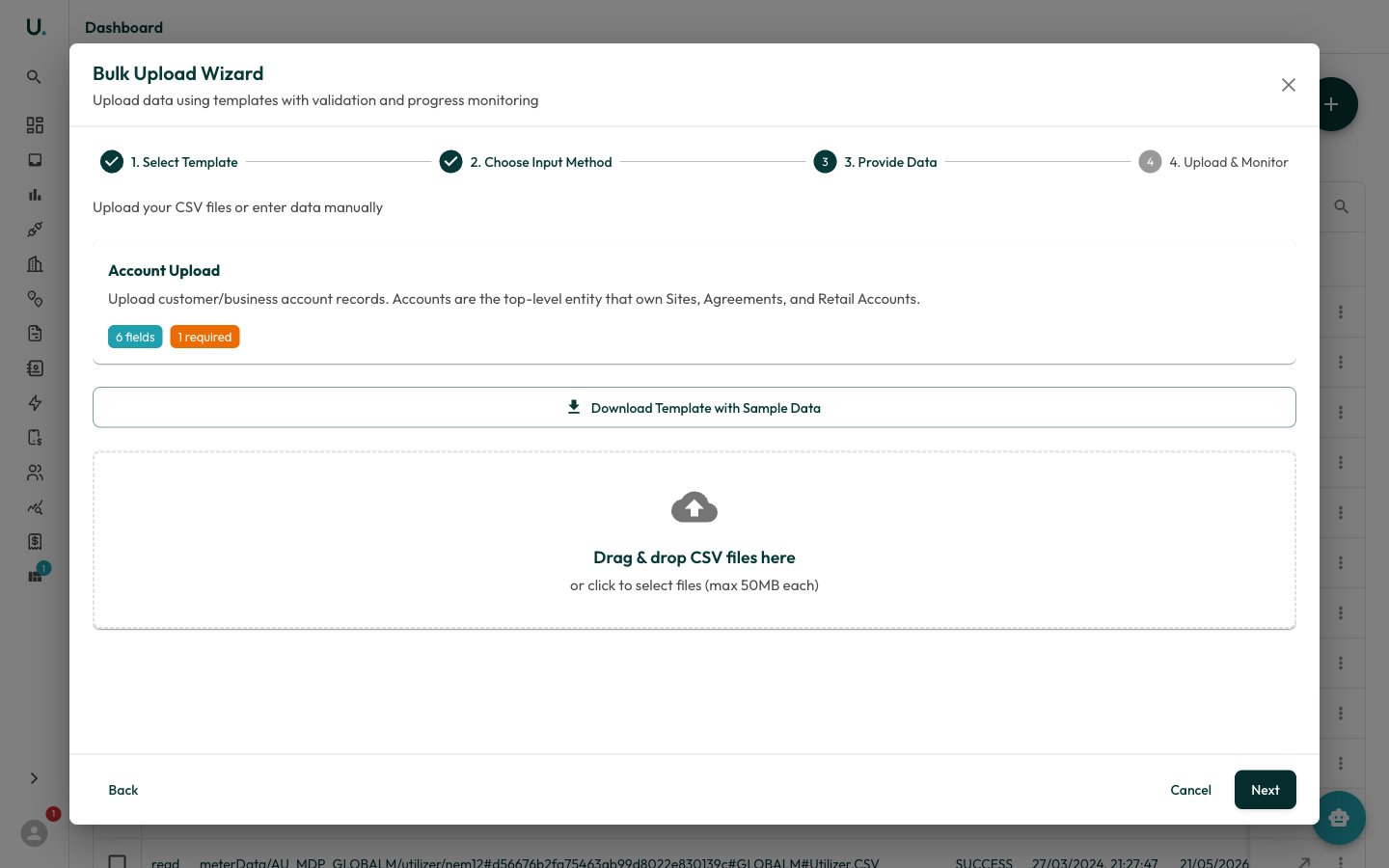
4
Upload and monitor
Click Finish to start the upload. UMS processes your files in the background and shows live progress for each one, including how many rows succeeded and any per-row errors.
Onboarding upload (all-in-one)
When you’re setting up a brand-new portfolio, the onboarding upload creates your whole hierarchy — accounts, sites, connections, retail accounts, and agreements — from a single CSV, instead of preparing a separate file for each entity in dependency order. It’s the file behind the guided onboarding wizard. It’s one row per connection (meter). Account, site, and agreement values repeat down the rows and are de-duplicated automatically on a natural key, so you list each account or site once across many connections.Before you upload
- Suppliers and utilities must already exist. They’re referenced by name and looked up only — an unknown name is a validation error. Set them up first.
- Values that repeat must be consistent. Two rows with the same
account_namebut a differentaccount_emailare rejected (no last-write-wins).
Columns
Download the template to get the exact headers: onboarding-template.csv. The required minimum per row isaccount_name, connection_identifier, retail_supplier_name, and retail_supplier_account_id. Everything else is optional — a row can create just an account, connection, and retail account when there’s no site or agreement yet.
Review import results
Back on the Imports page, each upload task has a row menu for reviewing the outcome:- Download — Retrieve the original file you uploaded.
- Exceptions — Download a CSV of the rows that failed, with the reason for each.
- Result Data — Download a CSV showing the per-row outcome (success or failure) for the whole file.
- Refresh — Re-check the status of an in-progress task.
Invalid files are skipped during upload rather than blocking the rest. Review the Exceptions report to see exactly which rows were rejected and why, then fix and re-import just those rows.